
Andrea Lenz
10 FFC Films in the Race for the "Foreign Oscar"

At the end of March 2022, the so-called "Oscars", the "Academy Awards", are scheduled to take place in Los Angeles for the 94th time. Among the awards will be an "Oscar" for Best International Film. The prize, which until 2019 was called the "Academy Award for Best Foreign Language Film", was first awarded in 1957 when it went to Federico Fellini's "La Strada - The Song of the Road". In the meantime, numerous candidates have been nominated for the prestigious prize, hoping to make it onto the shortlist, from which the winning film is in turn chosen. Among the films entered by the respective national film centres or ministries of culture are eight titles that screened at the FFC last year or can be seen there from 2 to 7 November, including this year's competition entries COMPARTMENT NO. 6, 107 MOTHERS, LEAVE NO TRACES and BRIGHTON 4TH, while OASIS 2020 screened in the FFC competition. The amateur acting ensemble of Marijana Novakov, Tijana Marković and Valentino Zenuni won the award for Best Acting Performance at the time. Here is a listing of the FFC titles currently competing for a nomination for the Academy Award for Best International Film (the countries from which they were submitted are underlined). BRIGHTON 4TH, SISTERHOOD and LEAVE NO TRACES were pitched in the script development phase at our co-production market connecting cottbus.
107 Mothers (Slovakia, Czech Republic, Ukraine) – Feature Film Competition FFC 2021
After the Winter/Posle Zime (Montenegro, Croatia, Serbia) – Spectrum FFC 2021
Brighton 4th (Georgia, Bulgaria, Russia, Monaco, USA) – Feature Film Competition FFC 2021
Compartment No. 6/Abteil Nr. 6 (Finland, Russia) – Feature Film Competition FFC 2021
Hive/Zgjoi (Kosovo, Switzerland, Albania, Northern Macedonia) – Hits FFC 2021
Leave No Traces/Żeby nie było śladów (Poland, France, Czech Republic) – Feature Film Competition 2021
Oasis (Serbia, Slovenia, Netherlands, Bosnia and Herzegovina, France) – Feature Film Competition FFC 2020
Sisterhood/Sestra (North Macedonia, Montenegro) – U18 Youth Film Competition FFC 2021
Commitment Hasan/ Baglilik Hasan (Türkei) – Specials
The Auschwitz Report/Správa (Slowakei, Czech Republic, Deutschland 2022) – Spotlight: Slovensko
Crashing waves and smoothing waves - Eastern European cinema remains political
Eastern European cinema remains political. Between parables of totalitarianism, analytical observation and caustic satire, developments since the fall of the Iron Curtain and current social rifts are put to the test, the hopes of the 1990s are set against the current political backward gear.
In TWO TYPES OF PEOPLE (TR) by Tunç Şahin, an agency buys up bad loans from banks and drives the debtors into a corner with psychological pressure, while DERSAADET APARTMENT (TR) by Tankut Kılınç shows an Istanbul where Art Nouveau buildings of old elegance have to make way for gentrification - including the house and thus the mental home of its protagonist. In FACTORY TO THE WORKERS (HR) by Srđan Kovačević, the employees of a Croatian machine tool factory, who once managed to resist the threat of privatisation and set up a self-governing body, are confronted with the laws of a global market in their struggle for economic survival. The Kafkaesque satire MAN FROM PODOLSK (RU) by Semyon Serzin takes the audience's expectations ad absurdum by turning predictable plots into the opposite: a young man is arrested by a militia because he is too sad and is asked to dance and sing by the policemen. Set to eclectic pop music, LOVE TASTING (PL) by Dawid Nickel is a visually sweeping account of hidden homosexuality in one of those places in Poland that are currently being declared 'LGBT-free zones' by national conservative mayors. A COLOURFUL DREAM (CZ) by Jan Balej, in a mixture of the best Czech puppet tradition, modern computer animation and black humour, depicts the cat-and-mouse game between a colourful group of artists and a perfidious dictator on a remote island - an imaginative parable of totalitarianism that has fallen out of time and is unfortunately, becoming topical again today.
The section ITS ALL GO IN THE EAST deals with the transformation processes in Poland, Russia, (East) Germany and Ukraine during the nineties. This journey leads from Andreas Voigt's LAST YEAR TITANIC (DE), which documents stories of upheaval and transformation in Leipzig, to THE ADMIRAL TCHUMAKOV (BE, FR), by Laurier Fourniau and Arnaud Alberola, who portray the former commander of a naval port on a Kyrgyz mountain lake, where a modern resort will soon replace the port facilities. In ARTISTS OF PERESTROIKA (NL), director Masha Novikova looks back at the lively underground cultural exchange between Dutch and Russian Gesamtkunst groups at the beginning of the 1990s, when mutual curiosity and anarchic joy of experimentation made people want to live together without borders. On the occasion of DEFA's 75th anniversary, a tribute is dedicated to the exceptional writer Christa Wolf and her commitment to the inner democratisation of East German society.
The political richness of this year's programme is completed by the gripping miscarriage of justice melodrama 25 YEARS OF INNOCENCE (PL) by Jan Holoubek, as well as the story of a forbidden love between two women in Turkey, staged with Mediterranean lightness in Ümit Ünal's LOVE, SPELLS AND ALL THAT (TR). And Dāvis Sīmani's THE YEAR BEFORE THE WAR (LV, CZ, LT) about the turmoil of World War I's pre-March is told in black and white dream images with mystical elements. They promise exciting and thought-provoking entertainment.
This mixture cracks! - Thrilling genre diversity between humor, provocation and action at the 31st FFC
This year, the 31st FilmFestival Cottbus is once again letting it rip with some films. They mix genres and bring exciting entertainment to the audience. Between breakneck shootouts, pointed jokes, adventurous liaisons and surreal communities of destiny reflect thoroughly contemporary social contrasts. From laughter to tears to fear, there is something for everyone.
Highly topical themes can be found, such as the forest fire inferno blockbuster FIRE (RU). In the Russian action thriller full of drama and humor by Alexey Nuzhny from the Hits section, which stands out for its particularly high production value, a group of firefighters fights their way through the burning forests of Siberia to save the inhabitants of a remote village, although they don't even want to be saved out of sheer stubbornness. From Bulgaria comes ESCAPE (BG) by Victor Bojinov, which will have its world premiere at the FFC and sums up urban-rural antagonisms in thriller form. A rural commune in an abandoned mountain village meets a boot camp for junkies when one of the clients from the rehab center takes refuge in the dropout idyll and subsequently causes a lot of trouble. In the Spectrum section, romantic sci-fi dramedy meets a feel-good musical in GARBAGE THEORY (HU) by Ákos Badits and the autistic scientist Panna meets Boy, a clumsy alien in Beatles look. Together they must defend the Earth against aliens who want to wipe out humanity because of their destructive instincts towards other worlds. In the same section, the bill collector Munir shoots his way through the steppe landscape of the northern Serbian Vojvodina in LOAN SHARK (RS) by Nemanja Ćeranić, a groovy film noir with Western motifs, while entertainingly crazy fable madness meets social media criticism in Rasmus Merivoo's KRATT (EE). A group of children sells their own grandma's soul to the devil during smartphone withdrawal in the countryside, thereby summoning an Estonian leprechaun called Kratt, who causes a lot of action.
The Hits section is rounded off by daring chases and politically incorrect jokes in the Serbian box-office hit SOUTH WIND 2: SPEED UP (RS) by Miloš Avramović and the ultimate firework of brute humor in NIMBY (FI) by director Teemu Nikki, notorious for offbeat comedies, whose previous film bears the provocative title THE EUTHANIZER. Young Mervi's coming out to her parents turns into a shootout of prejudices and soon it's hetero versus homo, polygamous versus monogamous, cosmopolitan versus provincial, vegan versus alcoholic, Christian versus Muslim, Finnish versus German, while underneath the hullabaloo surface countless lines of thought unfold around questions of social conscience, once again underlining the positive ambivalence of this year's genre diversity.
Advance ticket sales are on now at filmfestivalcottbus.de and at all Reservix advance sales points. Tickets for the 31st FFC cost between 4.00 EUR and 7.50 EUR. For FFC lovers there are 5-ticket passes and festival passes once again. For the first time, the FFC also offers an online FestivalPass.
Independent, fearless, indomitable: the heroines of the 31st FFC
In its 31st edition, the FilmFestival Cottbus will present a total of 61 films from 33 (co-)production countries by and about women. The films bear witness to a world in which women can make equally sensitive films about men as men can make subtle films about women.
Thematically, the contributions of the 31st FFC revolve around strong women and their everyday, sometimes dramatic stories. One experiences heroines, but also anti-heroines. Often the focus is on overcoming archaic and patriarchal pecking orders, but also on the invisible private sphere and the confrontation with one's own fears, right up to the turbulent patchwork romcom about the consequences of the lesbian coming out of a family mother, which became a box office hit in Catholic Poland of all places.
In the Feature Film Competition, two teenage girls in LOOKING FOR VENERA (KO, MZ) by Norika Sefa search for their individual freedom in the patriarchal environment of the Kosovar province between the ruins of war and the remnants of tradition, while Peter Kerekes in 107 MOTHERS (SK, CZ, UA) sensitively portrays the stories of mothers in a women's prison in Odessa, Ukraine, on the border between fiction and fact. In a series of interviews, real prisoners provide insights into their mental lives, motherhood and the motives for their actions.
In the Hits section, HIVE (KO, CH, MZ, AL) by Blerta Basholli will be screened, the first feature film ever to win all three main tours at the renowned Sundance Film Festival. Based on true events, Basholli tells the success story of a Kosovar women's collective of war widows who, between personal loss and the struggle for survival, set up their own ajvar production, accompanied by the mistrust of the patriarchal village community.
In the section Spectrum, FIRE (KZ), by Kazakh director Aizhan Kassymbek, follows the touching story of a survival artist in a mix of quirky soap and carefully arranged visual dramaturgy. In the Close Up TR section, the 31st FFC presents IT'S ALL ABOUT PEACE AND HARMONY (TR) by Nesimi Yetik, an arousing, brilliantly pictorial ensemble film between direct cinema and American independent film about a sisterly war of the roses and the impossibility of breaking away from her ageing mother. From the indomitable outcast to the intrepid leader, the women in the films at this year's 31st FilmFestival Cottbus stand for a world full of diversity that is in upheaval.
Eastern Europe between Teachers' Lounge, Murman Railway and Brighton Beach
The competitions of the 31st FilmFestival Cottbus at a glance
Data sheet
The FilmFestival Cottbus is subject to the 3G regulation.
Fill out one data sheet per audience event & person and hand it in at the entrance. The data sheets can also be found on the FFC website for download and at each venue. For more information on our Corona Rules, click here.
Persons with respiratory symptoms (unless proven by a written medical certificate, e.g. a cold) are not permitted to attend the event. Persons who are not willing to comply with the regulations may be refused entry within the framework of the house rules. Please check the rules in force at the time of your visit to the cinema.
Datenbogen
Das 31. FilmFestival Cottbus unterliegt der 3G-Regelung.
Füllt pro Publikumsveranstaltung & Person einen Datenbogen aus und gebt diesen am Einlass ab. Die Datenbögen findet Ihr auch auf der FFC-Website zum Download und an jedem Veranstaltungsort. Weitere Informationen zu unseren Corona-Regeln gibt es hier.
Personen mit Atemwegssymptomen (sofern nicht mit schriftl. ärztlichem Attest nachgewiesene z.B. Erkältung) dürfen die Veranstaltung nicht besuchen.
Personen, die nicht bereit sind, sich an die Regelungen zu halten, kann im Rahmen des Hausrechts der Zutritt verweigert werden.
Bitte informiert Euch tagesaktuell vor dem Kinobesuch über die zu diesem Zeitpunkt geltenden Regeln.
Festival sections and thematic overview FilmFestival Cottbus 2021
The 31st FilmFestival Cottbus returns to local cinemas from 2nd to 7th of November and presents its programme of 170 films from 40 (co-)production countries, for the first time, in seven venues and on a total of ten screens. In addition, there will be digital cinema in streaming, parallel to the festival and extended until 16th of November. The festival opens with the competition entry ABTEIL NR. 6, a railroad movie between East and West, metropolis and province and two opposing people, which won several prizes in Cannes.
In addition to the four competitions and traditional programme sections, the 31st FFC highlights Slovakian cinema, the Turkish film landscape and the transformation processes after the collapse of the Soviet Union. From Slovak classics from 1946 to current genre and auteur films to full-dome films. From film heritage to science fiction, from slapstick to interactive film games, from the quirky horror comedy to the crisis of meaning of a dissatisfied mainstream director, from new works by old masters like Srdjan Dragojević, Petr Bebjak or Levan Koguashvili to masterful debuts by new talents. Female characters often take centre stage, often the unusual surprises - from the family comedy about a family mother's lesbian coming out, which became a box office hit in Poland, to the contemplative concept film about a mother and son who brought their husband and father out of a coma after a stroke through sheer empathy and togetherness.
We are happy to provide you with an introductory thematic overview of this year's programme.
Feature Film Competition
12 films from 19 production countries compete for the main prize of 25,000 EUR for the best film and the prize sculpture LUBINA. In addition, the International Jury will award a Special Prize for Best Director and a Prize for Best Acting Performance.
Range: From the high-energy road movie IN LIMBO (Russia, dir. Alexander Hant) about two rebellious teenagers who flee from their parents' homes that have become too narrow in a mixture of "Thelma and Luise" and "Natural Born Killers" into the vastness of the Russian provinces, to ORCHESTRA (Slovenia, R: Matevž Luzar), the ironically melancholic tour of a Slovenian brass band to neighbouring Austria, to THE STAFFROOM (Croatia, director: Soja Tarokić), a precise observation of collegial interaction in a teachers' office, and 107 MOTHERS (Slovakia, Czech Republic, Ukraine, director: Péter Kerekes), a fascinatingly powerful reflection on women's roles and constructions of motherhood in an Odessa prison.
Short Film Competition
Absurd and sweet, groovy and poetic, the 13 films from a total of eleven production countries in the short film competition "The Long Night of Short Films" take us into worlds full of exciting contrasts. The participating directors have the chance to win a main as well as a special prize.
Range: From the longing for freedom of Berlin's techno scene in a Lithuanian prefab building (TECHNO, MAMA; Lithuania, R: Saulius Baradinskas) to the failing attempt of a Kazakh policeman to portray 'his' police as a transparent institution serving the citizens (COMRADE POLICEMAN; Kazakhstan, R: Assel Aushakimova) to the bittersweet everyday thriller at a Czech lake (ANATOMY OF A CZECH AFTERNOON; Czech Republic, R; Adam Martinec).
U18 Competition Youth Film
Exuberant emotions and the neverending urge for freedom. The seven films in this year's U18 Youth Competition impressively show us the different facets of growing up in the digital age.
Range: From two closest friends drifting apart during puberty (SISTERHOOD; North Macedonia, France, R: Dina Duma) to the portrait of a fragile father-daughter relationship (GERANIUM; Turkey, R: Çağıl Bocut) to being a closet gay in an 'LGBT-free zone' in Poland (LOVE TASTING, R: Dawid Nickel).
Spectrum
Anything but average. Cops who arrest you for seeing the world too black (THE MAN FROM PODOLSK, Russia, directed by Semyon Serzin)? Film noir in the Serbian lowlands (LOAN SHARK, Serbia, directed by Nemanja Ćeranić)? Grandma as an Estonian mythical figure (KRATT, Estonia, director: Rasmus Merivoo), who becomes uncomfortable when she is given nothing to do? Nothing is impossible ...
Range: From young adults in the former Yugoslavia in search of their lost identity (AFTER THE WINTER; Montenegro, Serbia, Croatia, R: Ivan Bakrač) to a family man who defies his bankruptcy lightheartedly instead with sombre tones (FIRE; Kazakhstan, R: Aizhan Kassymbek) to the hard-boiled Insta-style bullying story about a dog owner who falls under the wheels of the internet machine after her dog vomits in the underground train (#DOGPOOPGIRL; Romania, R: Andrei Huţuleac).
Close Up Turkey
With psychological sensitivity and unforeseen twists, current Turkish cinema addresses current developments, historical references and personal conflicts - thoughtful, visually powerful, spot-on, across genre boundaries.
Range: From the gentrification reflection DERSAADET APARTMENT (Turkey; R: Tankut Kılınç) to the Yesilçam homage THE CEMIL SHOW (Turkey, R: Bariş Sarhan) and the unusual portrait of two mismatched sisters who cannot get away from their ageing mother (IT'S ALL ABOUT PEACE AND HARMONY; Turkey, R: Nesimi Yetik) to the reunion, staged with a mixture of Mediterranean lightness and introverted melancholy, of two women whose homosexual love story was ended by their parents when they were teenagers (LOVE, SPELLS AND ALL THAT; Turkey, director: Ümüt Ünal).
Spotlight Slovensko
This year Slovakian cinema celebrates its 100th birthday. Reason enough to delve into the history and present of an unusual film country and compare cult films from the 1960s with current works.
Range: Five "film couples" compare cult films from the post-war period and the 1960s with current works on similar themes - such as THE BOXER AND THE DEATH (ČSSR 1963; R: Peter Solan; starring Manfred Krug) with Peter Bebjak's THE AUSCHWITZ REPORT (Slovakia, Czech Republic, Germany), or Stanislav Barabáš's expressionist war film THE BELLS TOLL FOR THE BAREFOOTED (ČSSR 1965) with Mira Fornay's brilliant outsider portrait MY DOG KILLER (Slovakia, Czech Republic 2013).
Much new in the East
When the Soviet Union dissolved in 1991, the lives of millions of people changed. The heroes of the films reflect the epochal upheavals of the past 30 years. Their lives trace the social, economic and political changes.
Range: From the former commander of a military port who is now only a contemporary witness (THE ADMIRAL TCHUMAKOV; Belgium, France, R: Laurier Forneau, Arnaud Alberola ), to a thermal power plant worker who struggles to hold together the remnants of the plants' choir (THE HEAT SINGERS; Ukraine 2019, R: Nadia Parfan) to a reunion with classic feature films and documentaries about the upheavals of the 1990s such as KATRINS HÜTTE (Germany 19991/92, director: Joachim Tschirner), LETZTES JAHR TITANIC (GDR 1990; director: Andreas Voigt), ÖSTLICHE LANDSCHAFT (Germany 1991, director: Eduard Schreiber) and PSY - HUNDE (Poland 1992; director: Władysław Pasikowski).
Specials
Numerous SPECIALS round off the festival programme - from films by jury members to TV series in the "Series Lounge", from a Christa Wolf homage on the occasion of "75 Years of DEFA" to the FullDome films in the Planetarium and the "Kinoteatr" from Zielona Góra.
Range: From films by the jury members to TV series in the "Series Lounge", from a Christa Wolf homage on the occasion of "75 years of DEFA" to the FullDome films in the Planetarium and the "Kinoteatr" film LOVE YOU, TOO (Poland, director: Lech Mackiewicz) from Cottbus' twin city Zielona Góra and the second part of the contemporary reflection WHAT DOES BOSNIA AND HERZEGOWINA MEAN TO YOU? (Bosnia and Herzegovina, R: Alma Cocaj, Rea Memić, Sara Ristić, Mirela Salihović, Emina Šehić), as a short film compilation by five female directors from Sarajevo, this time.
FilmWerkStadt
Structural change in Brandenburg is one of the most discussed topics in the region. But where industry changes, urban spaces, everyday working life and coexistence also change.
Range: From a long-term observation of a machine tool factory in Croatia occupied by the workers, FACTORIES TO THE WORKERS (Croatia; Director: Srđan Kovačević) to a portrait of mentality and reflection on structural change in the mining-dominated Erzgebirge STOLLEN (Germany, Director: Laura Reichwald).
MIOB IN SHORTS
The European festival network MIOB is an association of seven European film festivals. In addition to the MIOB New Vision Award for a current feature-length film, the network presents the MIOB In Shorts Award. The 2021 award will be presented at this year's FFC. All 15 short films from 15 production countries will be screened in the programme.
Polskie Horyzonty
The film series includes contributions by established masters and young filmmakers from Poland - one of the most film-producing countries in Eastern Central Europe. On the pulse of current affairs and artistically diverse between auteur film and commercial cinema.
Range: From the successful patchwork comedy BLACK SHEEP (Poland, director: Aleksander Pietrzak) about a bland wife who turns family life upside down with her lesbian coming-out, to the episodic film EROTICA 2022 (Poland, directors: Katarzyna Adamik, Olga Chajdas, Ana Jadowska, Anna Kazejak, Jagoda Szelc), in which five renowned directors reflect on sexual power relations and erotic fantasies from a feminist perspective.
Homeland | Domownja | Domizna
We examine film-making in Lower and Upper Lusatia on Sorbian and regional themes, partly in the Sorbian language. Thematically extensive, one thing becomes clear: homeland is not a fixed concept.
Range: From a tribute to the Sorbian film pioneer Toni Bruk, who died in December 2020 as a result of a corona infection, to the recent DIE WALDGÄNGER (Germany, directed by Gordon Kämmerer) at the Cottbus State Theatre.
Hits
Blockbusters, box-office hits, crowd-pleasing films: Between adventure thriller and social comedy, Eastern European films are made with high production value - multi-layered entertainment with brains, never-ending suspense and spot-on punchlines.
Range: From the Russian forest firefighter cracker FIRE (Russia, R: Alexey Nuzhny) to the quirky Finnish culture and mentality clash comedy NIMBY (Finland, R: Teemu Nicki) to the Kosovar HIVE (Kosovo, Switzerland, Northern Macedonia, Albania; R: Blerta Basholli), the success story of a women's collective in the patriarchally dominated Kosovar province, and the Estonian Ostalgie comedy GOODBYE SOVIET UNION (Estonia, Finland; director: Lauri Randla), which can certainly hold a candle to "Goodbye Lenin".
Kids at the Movies
5 film programmes with a current cross-section of Eastern European children's film production are shown in the series KIDS IM KINO. Fantastic adventures and stories suitable for viewers aged 3 to 12.
Range: From the current ARD fairy tale adaptation DER GEIST IM GLAS (Germany, R: Markus Dietrich), coming this year from Radio Bremen, to an encounter with a rebellious fairy (SHIJA, THE REBEL FAIRY; Finland, Netherlands, Norway, R: Marja Pyykkö), to the remake of the fairy tale classic PETERCHENS MONDFAHRT (Germany; R: Ali Sahady Amady).
Lusatian FilmShow
The regional competition for filmmakers from Lower and Upper Lusatia is cult and offers a unique platform and a great opportunity to show films on the screen of the time-honoured Weltspiegel film theatre.
Further information on the 31st FFC can be found at filmfestivalcottbus.de
Open for accreditation
For accredited national and international representatives of the press and industry, the FFC is setting up online access to almost the entire festival programme. Accreditations are now possible online and are free of charge for the reporting press:
www.filmfestivalcottbus.de/de/service/akkreditieren.html
For further information, interview requests and broadcast- and print-ready images, please contact our PR and Marketing Managers Andrea Lenz, Eddy Quiel and Christian Seifert.
Mail: This email address is being protected from spambots. You need JavaScript enabled to view it.
Telefon: +49 (0) 355/43107 -13, -14 oder -26
LANGE NACH DER SCHLACHT - Kick-off for the novinki seminar
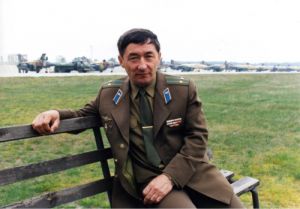
The opening film evening for the seminar Film Expeditions in Eastern Europe - Film Critical Writing (novinki seminar) will show the documentary film "LANGE NACH DER SCHLACHT" by Eduard Schreiber and Regine Kühn on 21st of October at the Kino Krokodil in the run-up to the 31st FilmFestival Cottbus - Festival of Eastern European Film cooperating with the media library of the Institute for Eastern European Studies at the Free University of Berlin, the University of Potsdam and the FilmFestival Cottbus (FFC).
Between cinema seat and living room couch
The 31st FilmFestival Cottbus presents the latest from Eastern Europe in cinemas and via streaming